







Spannungssignalnormen für elektrische Aktuatoren – GB/T 3369.2—2008/IEC 60381-2:1978
Applicable Standards for Electric Actuator Voltage Signals (1-5V, 2-10V, 0-5V, 0-10V): Analogue Signals for Process Control Systems – Part 2: Direct Voltage Signals (GB/T 3369.2—2008/IEC 60381-2:1978)IEC 60381-2-1978, IDT Preface GB/T 3369.2—2008/IEC 60381-2:1978 – Analogue Signals for Process Control Systems – Part 2: Direct Voltage Signals The GB/T 3369 standard consists of the following two parts: […]
Vergleich der Störfestigkeit: 4–20 mA vs. 2–10 V
Bei der Anwendung der Störfestigkeit elektrischer Aktuatoren ist das 4-20-mA-Analogsignal dem 2-10-V-Analogsignal deutlich überlegen. Woran liegt das? Analyse der Störfestigkeit des 2-10-V-Signals (DCL Huayi Intelligent Control). Wie im obigen Diagramm dargestellt: Bei Verwendung von 2-10 V führt der höhere Eingangswiderstand des Moduls (R = 34 kΩ) zu […]
Häufig verwendete Busse für elektrische Aktuatoren
An increasing number of industrial control systems are deploying field buses to control more sensors and actuators. As a key actuator in fluid control processes, electric actuators are commonly used in industrial applications. The most frequently used bus systems for electric actuators include Modbus, CAN, Profibus, DeviceNet, Foundation Fieldbus, HART, and Ethernet. Common Bus Systems […]
EN15714-2 Klassifizierung der Steuerung elektrischer Stellantriebe (Betriebsart)
Control Duty Classifications: Class A: ON-OFF Type (On/Off) Function: The actuator is required to drive the valve through its entire stroke from fully open to fully closed (and vice versa). Typical Use: Applications where valves are either fully open or fully closed. Class B: Fine-Tuning/Positioning Adjustment Type Function: The actuator occasionally moves the valve to […]
Wann sollte man einen Prozesssteuerungsaktor auswählen?
Application Background of Process Control Actuators In many process control systems, it is necessary to achieve highly accurate and consistent control of the flow rate of liquids or gases through an automated control system (PLC/DCS). Due to the high precision required, such systems often need to make continuous and precise small adjustments to control valves […]
Elektromagnetische Interferenzprüfung für elektrische Aktuatoren (EFT)
The Increasingly Harsh Electromagnetic Environment in Industrial Sites As industrial electrification and intelligence continue to advance, an increasing number of high-power electrical devices (such as kilowatt-level motors, frequency converters, and inverters) are being integrated into industrial process control systems. Consequently, the electromagnetic environment in industrial sites is becoming more complex. In such a challenging electromagnetic […]
Gängige Ventiltypen und ihre Merkmale
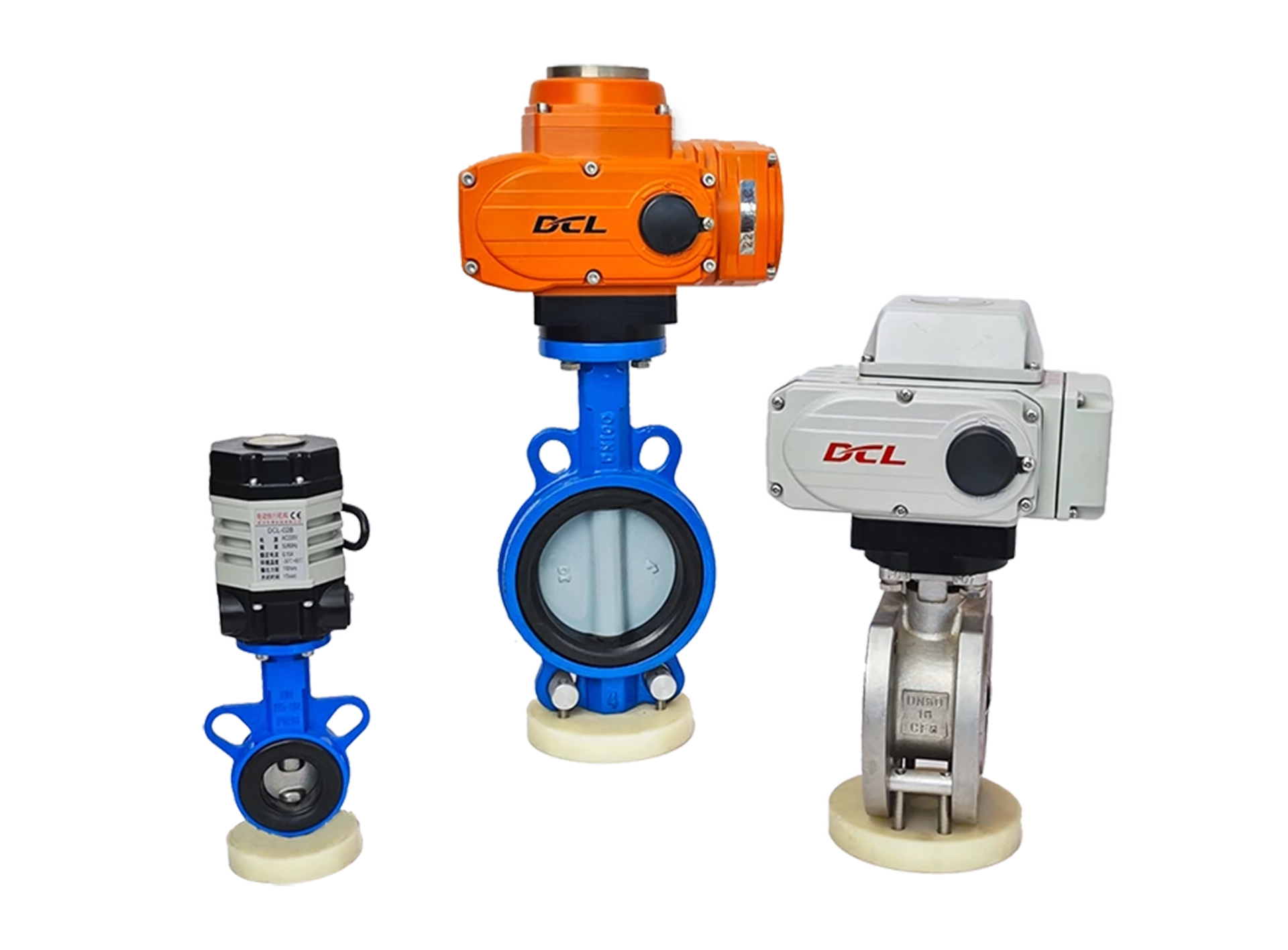
Butterfly Valve Working Principle: A butterfly valve uses a disc to control the flow of fluids or gases. The disc is mounted on a shaft, and when the handle is turned, the disc rotates 90 degrees to allow or block the flow. Features: Simple structure, compact size, low flow resistance, commonly used in large flow […]
Schutzarten des Gehäuses (UL, CSA, NEMA)
The protection ratings for enclosures defined by UL, CSA, and NEMA are categorized as follows. While the classifications are generally similar, there are minor differences in the details, so it is advisable to refer to the specific standards for more precise information. Type Classification Definition 1 General For indoor use, providing protection for enclosed components […]
Schutzart des Aktuators (IP-Schutzart): Staub- und Wasserschutz

Definition der IP-Schutzart: Die IP-Schutzart (Ingress Protection) definiert den Schutzgrad eines Produktgehäuses gegen das Eindringen von festen Fremdkörpern (wie Werkzeugen, Fingern, Staub usw.) und Wasser (durch Kondensation, Waschen, Eintauchen usw.). Die beiden Ziffern nach „IP“ geben den Schutzgrad gegen das Eindringen von festen Fremdkörpern und Wasser an. Die erste Ziffer […]
Funktionsweise von Aktoren mit Busfunktionen – Modbus, CAN, Ethernet, Profibus
When you install a DCL electric control valve with bus functionality on a pipeline, you can control a set of electric control valves through the bus (Modbus, CAN, Ethernet, Profibus) to achieve synchronized control of the valve cluster. The control system communicates with the actuator via a bus communication protocol, sending commands to control the […]


 English (UK)
 香港中文
 繁體中文
 English (Canada)
 English (South Africa)
 English (Australia)
 English (New Zealand)
 English
 Español de Puerto Rico
 Français du Canada
 Español de México
 Español de Chile
 Español de Colombia
 Español de Uruguay
 עִבְרִית
 Nederlands (België)
 Français de Belgique
 Eesti
 Latviešu valoda
 Lietuvių kalba
 Français
 Deutsch
 Norsk nynorsk
 Deutsch (Österreich)
 Slovenčina
 Deutsch (Schweiz)
 Italiano