







Normas de señales de tensión para actuadores eléctricos – GB/T 3369.2—2008/IEC 60381-2:1978
Normas aplicables para señales de tensión de actuadores eléctricos (1-5 V, 2-10 V, 0-5 V, 0-10 V): Señales analógicas para sistemas de control de procesos – Parte 2: Señales de tensión continua (GB/T 3369.2—2008/IEC 60381-2:1978) IEC 60381-2-1978, IDT Prefacio GB/T 3369.2—2008/IEC 60381-2:1978 – Señales analógicas para sistemas de control de procesos – Parte 2: Señales de tensión continua La norma GB/T 3369 consta de las dos partes siguientes: […]
Comparación del rendimiento de resistencia a interferencias: 4-20 mA frente a 2-10 V.
En la aplicación del rendimiento antiinterferencias de los actuadores eléctricos, la señal analógica de 4-20 mA supera significativamente a la señal analógica de 2-10 V. ¿Por qué ocurre esto? Análisis de la señal de 2-10 V Diagrama antiinterferencias para la señal de 2-10 V (DCL Huayi Intelligent Control) Como se muestra en el diagrama anterior: Al usar 2-10 V, debido a la mayor resistencia de entrada en el módulo (R=34 kΩ), […]
Autobuses de uso común para actuadores eléctricos
Un número creciente de sistemas de control industrial están implementando buses de campo para controlar más sensores y actuadores. Como actuadores clave en los procesos de control de fluidos, los actuadores eléctricos se utilizan comúnmente en aplicaciones industriales. Los sistemas de bus más utilizados para actuadores eléctricos incluyen Modbus, CAN, Profibus, DeviceNet, Foundation Fieldbus, HART y Ethernet. Sistemas de bus comunes […]
EN15714-2 Clasificación del control de actuadores eléctricos (servicio)
Control Duty Classifications: Class A: ON-OFF Type (On/Off) Function: The actuator is required to drive the valve through its entire stroke from fully open to fully closed (and vice versa). Typical Use: Applications where valves are either fully open or fully closed. Class B: Fine-Tuning/Positioning Adjustment Type Function: The actuator occasionally moves the valve to […]
¿Cuándo elegir un actuador de control de procesos?
Application Background of Process Control Actuators In many process control systems, it is necessary to achieve highly accurate and consistent control of the flow rate of liquids or gases through an automated control system (PLC/DCS). Due to the high precision required, such systems often need to make continuous and precise small adjustments to control valves […]
Pruebas de interferencia electromagnética para actuadores eléctricos (EFT)
The Increasingly Harsh Electromagnetic Environment in Industrial Sites As industrial electrification and intelligence continue to advance, an increasing number of high-power electrical devices (such as kilowatt-level motors, frequency converters, and inverters) are being integrated into industrial process control systems. Consequently, the electromagnetic environment in industrial sites is becoming more complex. In such a challenging electromagnetic […]
Tipos comunes de válvulas y sus características
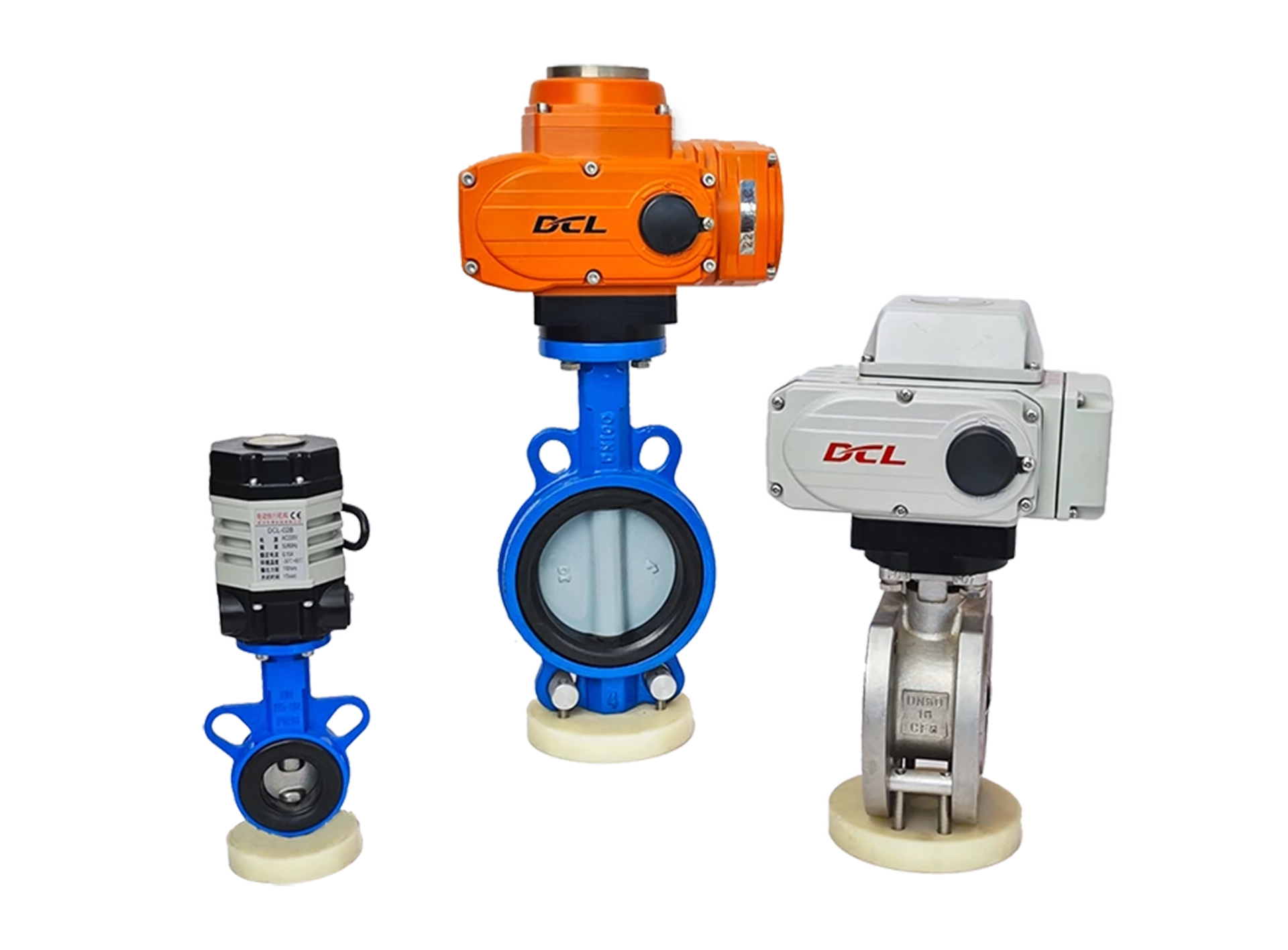
Butterfly Valve Working Principle: A butterfly valve uses a disc to control the flow of fluids or gases. The disc is mounted on a shaft, and when the handle is turned, the disc rotates 90 degrees to allow or block the flow. Features: Simple structure, compact size, low flow resistance, commonly used in large flow […]
Clasificaciones de protección de la carcasa (UL, CSA, NEMA)
The protection ratings for enclosures defined by UL, CSA, and NEMA are categorized as follows. While the classifications are generally similar, there are minor differences in the details, so it is advisable to refer to the specific standards for more precise information. Type Classification Definition 1 General For indoor use, providing protection for enclosed components […]
Clasificación de protección IP contra polvo y agua del actuador

IP Protection Rating DefinitionThe IP (Ingress Protection) rating defines the protection level of a product’s enclosure against the intrusion of solid objects (such as tools, fingers, dust, etc.) and the ingress of water (from condensation, washing, immersion, etc.). The two digits following “IP” indicate the protection levels for solid objects and water intrusion. The first […]
Cómo funcionan los actuadores con funciones de bus: Modbus, CAN, Ethernet, Profibus
When you install a DCL electric control valve with bus functionality on a pipeline, you can control a set of electric control valves through the bus (Modbus, CAN, Ethernet, Profibus) to achieve synchronized control of the valve cluster. The control system communicates with the actuator via a bus communication protocol, sending commands to control the […]


 English (UK)
 香港中文
 繁體中文
 English (Canada)
 English (South Africa)
 English (Australia)
 English (New Zealand)
 English
 Español de Puerto Rico
 Français du Canada
 Español de México
 Español de Chile
 Español de Colombia
 Español de Uruguay
 עִבְרִית
 Nederlands (België)
 Français de Belgique
 Eesti
 Latviešu valoda
 Lietuvių kalba
 Français
 Deutsch
 Norsk nynorsk
 Deutsch (Österreich)
 Slovenčina
 Deutsch (Schweiz)
 Italiano