




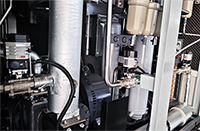



Instalación y uso
5 pasos para empezar a usar el actuador DCL Instale el actuador en la válvula Compruebe el limitador mecánico Cableado Ajuste la posición final de Apertura/Cierre Comience a usarlo Cómo hacerlo Ver más > Notas de aplicación Ver más > Manual del usuario Ver más > Anterior: Preguntas frecuentes Siguiente: 5 pasos para empezar a usar el actuador DCL
Documentos técnicos del actuador DCL
Normas (ISO/GB/UE) Ver más > Artículos técnicos Ver más >
Mantenimiento y reparación del actuador DCL
Fallos comunes y solución de problemas para el actuador ON-OFF para el actuador modulante para el actuador DC24V para DCL-02 Actuador ON-OFF para DCL-02 Actuador modulante Ver más >
¿Cómo ajustar la histéresis del actuador?

Setting the hysteresis allows the actuator to better match PID closed-loop control applications. Steps to Set the Hysteresis: Turn the S-A switch (highlighted in the red box below) to position 2. Rotate the adjustment knob (highlighted in the yellow box) to set the hysteresis. Each scale mark represents 0.5%. The adjustable hysteresis range is 0.5% […]
¿Qué tipo de válvulas pueden accionar los actuadores eléctricos DCL?
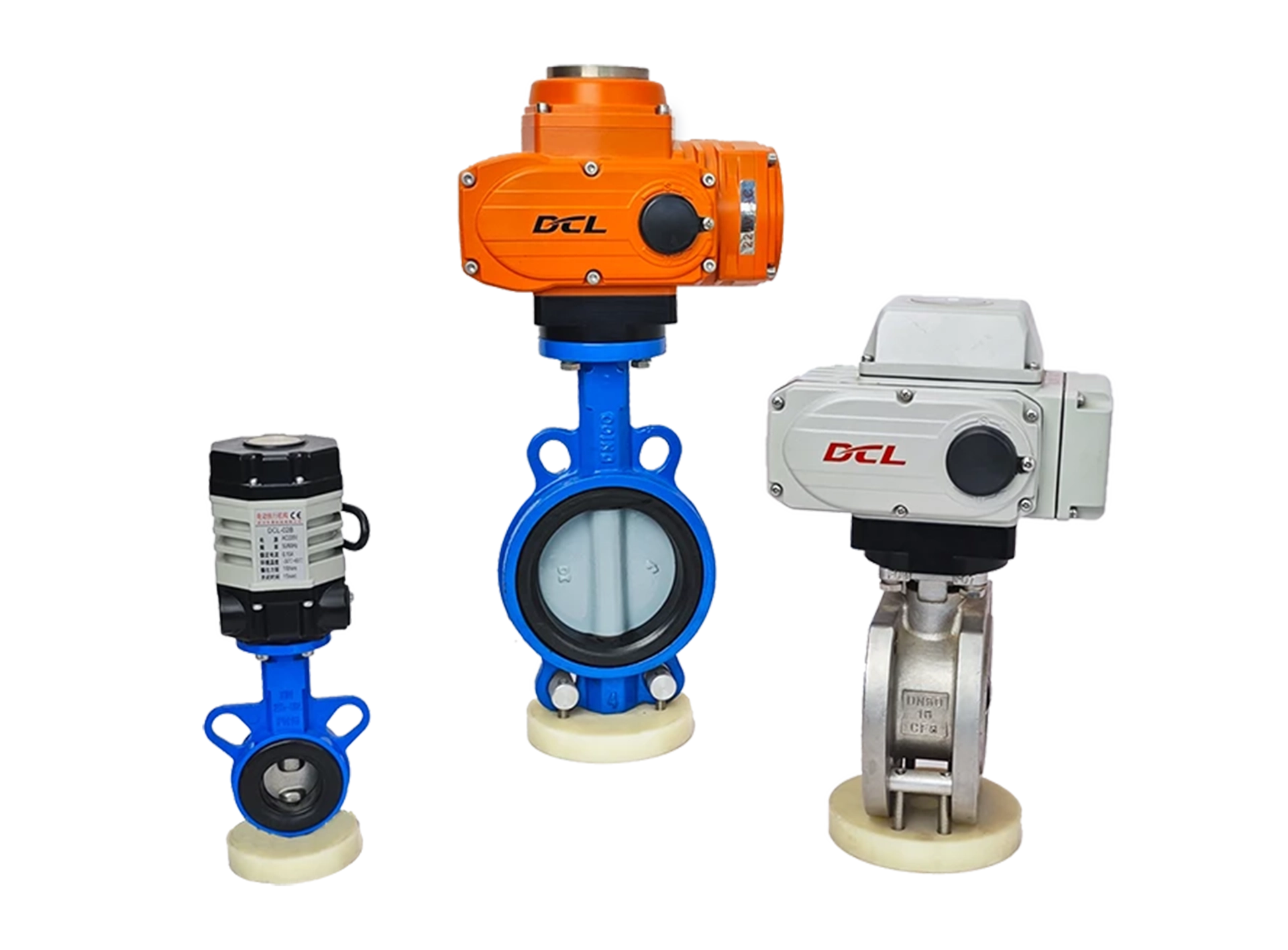
The DCL electric actuator is mainly used to drive butterfly valves with a diameter of less than 600mm, ball valves with a diameter of less than 350mm, and ventilation dampers and air flap valves with a diameter of less than 1200mm. Beyond these applications, some interesting use cases are also worth noting. For example: Rotating […]
¿Cómo funciona un actuador eléctrico?
Once connected to a power supply (AC380V, AC220V, AC24V, or DC24V), DCL electric actuators can be controlled by a Distributed Control System (DCS) using various control signals, including analog signals, digital signals, bus communication, and IoT networks. The actuator drives the electric valve to fully open, fully close, or adjust to a specified position, enabling […]
¿Por qué elegir un actuador eléctrico?
An electric actuator utilizes a motor-driven reduction mechanism to achieve both rotary and linear motion of a valve. Since it is powered by a motor, the electric actuator features a simple and reliable structure without requiring additional support systems like pneumatic or hydraulic sources. This results in higher energy efficiency and lower operational costs. At […]
Artículos técnicos
5 pasos para empezar a usar el actuador DCL
1. Instale el actuador en la válvula. Gire la válvula hasta la posición completamente cerrada. Instale el soporte en la válvula. Conecte el acoplamiento al eje de la válvula. Accione el actuador hasta la posición completamente cerrada con la manivela. Inserte el eje de salida del actuador en el orificio cuadrado del acoplamiento. Apriete la conexión entre estas piezas. […]
Instrucciones para el actuador DCL
Anterior: 5 pasos para empezar a usar el actuador DCL Siguiente: Manual de usuario del actuador DCL


 English (UK)
  香港中文
香港中文  繁體中文
繁體中文  English (Canada)
  English (South Africa)
  English (Australia)
  English (New Zealand)
  English
  Español de Puerto Rico
  Français du Canada
  Español de México
  Español de Chile
  Español de Colombia
  Español de Uruguay
  עִבְרִית
  Nederlands (België)
  Français de Belgique
  Eesti
Eesti  Latviešu valoda
  Lietuvių kalba
  Français
  Deutsch
  Norsk nynorsk
  Deutsch (Österreich)
  Slovenčina
  Deutsch (Schweiz)
  Italiano